If you’ve ever heard about the 25% reservation quota in private schools and wondered where it actually comes from, you’re really asking about the RTE Act 2009. It’s one of those laws that gets referenced constantly but rarely explained in a way that’s actually useful for parents trying to use it.
So here’s the RTE Act 2009 explained, minus the legal jargon.
What Is the RTE Act 2009?
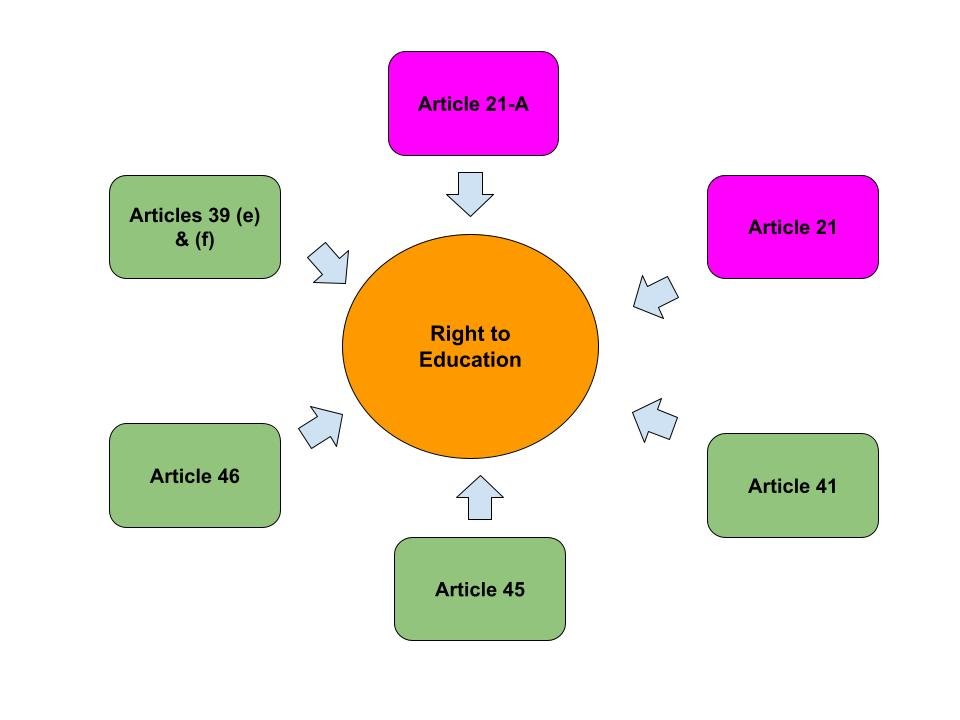
The RTE Act 2009, formally the Right of Children to Free and Compulsory Education Act, guarantees free and compulsory education to every child between the ages of 6 and 14 in India, and it operationalizes the right guaranteed under Article 21A of the Constitution.
It came into force on April 1, 2010, making India one of 135-odd countries at the time to have a law of this kind on the books.
Who Does the RTE Act Actually Cover?
Every child aged 6-14 falls under its umbrella, but it’s particularly significant for children from economically weaker sections (EWS) and disadvantaged groups, since it opens doors that were previously closed by school fees.
The 25% Reservation Rule
This is the part most people actually search for. Under Section 12(1)(c), every private unaided school must reserve 25% of seats at the entry level for children from EWS and disadvantaged backgrounds. These seats are free — no tuition fees for the entire duration of elementary education — and the government reimburses the school (though delays in reimbursement have honestly been a real and persistent problem).
Eligibility Criteria for the 25% Quota
Eligibility generally requires:
- The child must be a resident of the neighborhood/local area
- Family income below the state-specified threshold (varies by state, often around ₹1-3.5 lakh per annum)
- Belonging to SC/ST/OBC or other specified disadvantaged categories, in many states
Each state has its own portal and specific criteria, so it’s worth checking your state’s education department website rather than assuming national rules apply uniformly.
No-Detention Policy — Has It Changed?
Originally, the RTE Act 2009 included a “no-detention policy,” meaning children couldn’t be failed or held back until Class 8. This was amended in 2019, allowing states to conduct exams for Classes 5 and 8, and hold back students who don’t meet the required standard, after giving them a chance for re-examination. I actually think this amendment was overdue — the original no-detention rule, while well-intentioned, ended up reducing accountability in a lot of schools.
What Schools Cannot Do
The RTE Act also restricts schools from certain practices, and this matters just as much as the admission quota:
- No capitation fees or donations for admission
- No screening procedures (interviews, tests) for admitting children under age 6
- No expulsion or detention until Class 8 (subject to the 2019 amendment for Classes 5 and 8)
- No corporal punishment or mental harassment of any student
[link to related guide on anti-ragging laws for students here]
How Do Parents Actually Apply?
Most states run an online RTE admission portal that opens once a year, typically between January and March. Parents need to:
- Register on the state RTE portal
- Upload required documents (income certificate, caste certificate if applicable, residence proof, birth certificate)
- Select preferred schools within the designated distance from home
- Wait for the lottery/allotment result, since demand almost always exceeds available seats
A Real Example
Picture a domestic worker’s family in a Tier-2 city, earning around ₹1.5 lakh annually, wanting to send their child to a well-regarded private school nearby. Without the RTE Act, this would be financially impossible. Through the 25% quota, that child gets a genuine shot at quality education alongside children from far wealthier households — this is honestly one of the more meaningful equalizers the law has created, even with its implementation gaps.
FAQs
Q1: What age group does the RTE Act 2009 cover? It covers children between 6 and 14 years old, guaranteeing free and compulsory elementary education.
Q2: Is the 25% RTE quota applicable to all private schools? It applies to all private unaided schools, though minority institutions have some specific exemptions under the law.
Q3: How do I check if my child is eligible for RTE admission? Check your state’s RTE admission portal, which lists income limits, category criteria, and required documents specific to your state.
Q4: Does the RTE Act guarantee free education till Class 12? No, it only covers elementary education up to Class 8; it doesn’t extend to secondary or higher secondary education.
Q5: What happens if a private school refuses to admit an eligible RTE candidate? Parents can file a complaint with the district education officer or the State Commission for Protection of Child Rights, since refusal violates the Act.
Final Thoughts
The RTE Act 2009, explained plainly, is really about giving every child a fair shot at a decent education regardless of family income. Implementation has its gaps — reimbursement delays, awareness issues in rural areas — but for families who know how to use it, it genuinely opens doors that would otherwise stay shut. If you think your child qualifies, don’t wait for the admission window to almost close before applying.
Suggested image alt text: “Children studying in classroom under RTE Act 2009” Suggested image alt text: “Parent filling RTE admission form online in India”