Here’s something that surprises a lot of people: you can have the strongest case in the world, rock-solid evidence, an open-and-shut wrong done to you — and still lose, simply because you waited too long to file. That’s what the limitation period for civil cases is all about, and it trips up more people than you’d think.
I once had a friend who wanted to sue a contractor over shoddy construction work. Great case on paper. Except he’d waited almost four years to act, and by the time he came to me, the window had nearly closed. That’s the reality of the limitation period for civil cases — the law doesn’t wait for you to feel ready.
What Is the Limitation Period?
The limitation period for civil cases is the maximum time allowed under the Limitation Act, 1963, within which a person must file a lawsuit — after which the right to sue is generally lost, regardless of how valid the claim is.
It exists for a practical reason: evidence fades, memories blur, and witnesses disappear. The law wants disputes resolved while facts are still fresh.
How Long Do You Actually Have?
This isn’t a single number — it depends entirely on the type of case. Here’s a rough breakdown:
- Recovery of money (based on a written contract): 3 years from when the debt became due
- Suit for possession of immovable property: 12 years
- Suit for compensation for breach of contract: 3 years
- Suit against government/public bodies: Often extended, sometimes 30 years for certain property matters
- Suit for defamation: Just 1 year — much shorter than people expect
Notice how wildly these vary. A property dispute gives you over a decade, but a defamation claim gives you barely twelve months.
When Does the Clock Start Ticking?
This is where a lot of confusion happens. The limitation period doesn’t always start from the date of the original event — it starts from the date the “cause of action” arose, which isn’t always the same thing.
For example, if a debtor makes a partial payment, the clock can reset from that payment date. If fraud was concealed and only discovered later, the period may start from the date of discovery, not the date the fraud actually occurred.
Can the Limitation Period Be Extended?
Yes, in certain situations, though not casually. The law recognises:
- Acknowledgment of debt — if the defendant admits the debt in writing before the period expires, a fresh limitation period begins.
- Disability — if the plaintiff was a minor or of unsound mind when the cause of action arose, the clock starts once that disability ends.
- Fraud or concealment — as mentioned, discovery of fraud can restart the clock.
- Court closure — if courts were shut on the last day (this actually came up during COVID lockdowns), the period gets extended to the next working day.
What Happens If You File Late?
If you file after the limitation period has lapsed, the defendant can raise it as a defense, and courts are generally strict about enforcing it. There’s a provision under Section 5 of the Limitation Act allowing “condonation of delay” — but you’d need to show “sufficient cause,” and courts don’t grant this easily. Vague excuses like “I was busy” rarely work.
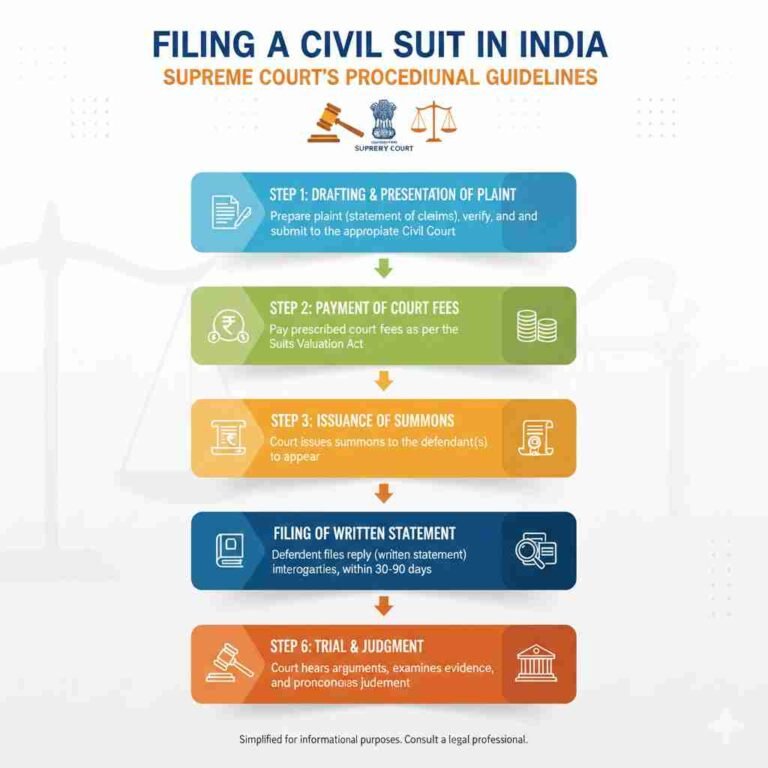
[link to related guide on how to file a civil suit here]
A Quick Real-World Example
Picture a shopkeeper in Jaipur who lent ₹2 lakh to a friend in 2021 on a handwritten promissory note, with no written repayment date. If nothing happens for three years — no acknowledgment, no partial payment — that claim risks becoming time-barred by 2024. Waiting till 2026 to act would likely be too late unless there’s some acknowledgment on record.
FAQs
Q1: What is the limitation period for a money recovery suit in India? Generally 3 years from the date the debt became due, though this can reset with a written acknowledgment.
Q2: Does the limitation period apply to criminal cases too? No, this concept is specific to civil matters. Criminal cases have their own separate rules, and many serious offences have no limitation at all.
Q3: Can I still sue after the limitation period has ended? Technically you can file, but the defendant will likely raise limitation as a defense, and the court will dismiss the suit unless you can show sufficient cause for the delay.
Q4: How do I calculate the limitation period for my case? It depends on the specific cause of action — the safest approach is consulting a lawyer who can identify the correct starting point and applicable period for your situation.
Q5: Is there any way to pause the limitation clock? Yes, situations like the defendant’s absence from India, ongoing negotiations with written acknowledgment, or legal disability (minority, unsoundness of mind) can pause or delay the countdown.
Wrapping Up
The limitation period for civil cases isn’t just legal fine print — it’s often the difference between winning and losing before your case even reaches trial. If you think you have a claim, don’t sit on it. Talk to an advocate early, get your facts documented, and act while the clock is still running in your favor.
Suggested image alt text: “Calendar and gavel representing limitation period for civil cases” Suggested image alt text: “Indian Limitation Act 1963 book on lawyer’s desk”