So someone owes you money, or a builder handed over a flat that doesn’t match what was promised, and you’re wondering how to file a civil suit in India. You’re not alone — thousands of people go through this every month, and honestly, most of them have no idea where to start. I’ve sat across the table from clients who thought filing a suit meant walking into a courtroom and shouting their grievance. It doesn’t work that way, and understanding the actual process saves you a lot of frustration.
This guide walks you through what really happens when you file a civil suit in India, from the first draft to the first hearing.
What Exactly Is a Civil Suit?
A civil suit is a legal action filed in a civil court to resolve a dispute between two or more parties — usually about money, property, or a breach of contract — where the goal is compensation or a specific remedy, not punishment.
Unlike criminal cases, nobody goes to jail in a civil suit (unless there’s contempt of court involved later). It’s about setting things right — recovering a debt, enforcing a contract, or getting possession of property back.
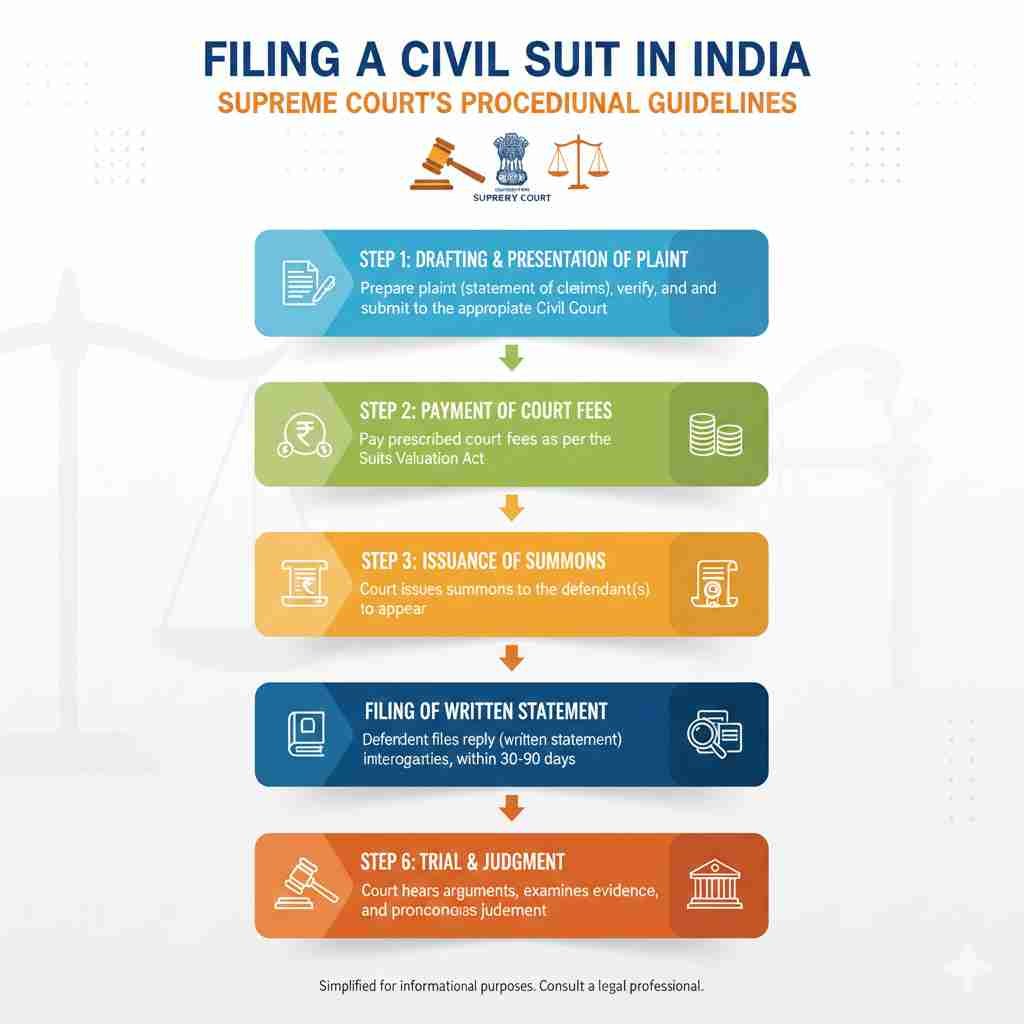
Step 1: Draft the Plaint
The plaint is the foundation document. It states who you are, who you’re suing, what happened, and what you want the court to do about it. A sloppy plaint can sink an otherwise strong case — I’ve seen it happen. Every fact matters, and vague allegations (“he cheated me”) won’t cut it; you need specific dates, amounts, and events.
Most people hire an advocate for this step, and honestly, I’d recommend it. Small drafting errors here cause big delays later.
Step 2: Identify the Correct Jurisdiction
Before you can file a civil suit in India, you need to know which court has the authority to hear it. This depends on:
- The value of the claim (pecuniary jurisdiction)
- Where the defendant resides or the cause of action arose (territorial jurisdiction)
- The subject matter itself (some matters go to specialised tribunals)
Filing in the wrong court means your case gets returned, and you lose weeks, sometimes months.
Step 3: Pay the Court Fees
Court fees in India are calculated as a percentage of the claim value, and this varies by state. In Rajasthan, for instance, the court fee structure is different from what you’d pay in Maharashtra. For a claim of ₹5 lakh, you might be looking at anywhere between ₹15,000 to ₹40,000 depending on the state and nature of the suit.
Step 4: File the Suit With Supporting Documents
Along with the plaint, you’ll need to attach:
- A list of documents you’re relying on
- A vakalatnama (if hiring a lawyer)
- An affidavit verifying the plaint
- Copies for each defendant, plus one for the court
Step 5: Court Issues Summons
Once the suit is admitted, the court issues summons to the defendant, giving them a chance to respond. This is where things slow down — defendants often delay accepting summons, and courts have to try multiple methods of service.
Step 6: Written Statement and Framing of Issues
The defendant files a written statement, and the court then frames “issues” — essentially, the specific questions the trial needs to answer. This stage alone can take several hearings.
Step 7: Evidence and Arguments
Both sides present evidence, witnesses are examined, and then final arguments are heard. This is usually the longest part of the process — civil suits in India can take anywhere from 2 to 10 years depending on complexity and court backlog. That’s not a typo, and it’s exactly why many people try mediation first.
Step 8: Judgment and Decree
The court delivers its judgment, followed by a formal decree. If either party isn’t happy with the outcome, an appeal can be filed in a higher court.
[link to related guide on civil vs criminal law differences here]
Common Mistakes People Make
- Filing without proper documentary evidence
- Ignoring the limitation period (more on that in our other guide) [link to limitation period article here]
- Ballparking the claim amount instead of calculating it properly
- Not attempting settlement or mediation first, even when it could’ve saved years
FAQs
Q1: How long does it take to file a civil suit in India? The actual filing takes a day or two once documents are ready, but resolving the case can take years depending on the court’s backlog and how contested the matter is.
Q2: Can I file a civil suit without a lawyer? Yes, you can file it yourself (in-person or “party-in-person”), but given how technical drafting and procedure can get, most people find it worth hiring an advocate, especially for anything beyond small claims.
Q3: What is the cost of filing a civil suit? Court fees depend on your claim value and state, typically ranging from 1% to 7.5% of the claim amount, plus lawyer’s fees which vary widely.
Q4: Can a civil suit be settled outside court? Absolutely, and in fact courts often encourage this through mediation or Lok Adalats — it’s usually faster and cheaper for everyone.
Q5: What happens if the defendant doesn’t respond to the summons? The court can proceed ex-parte, meaning it decides the case based on your side alone, though this doesn’t happen immediately — there are usually multiple attempts at service first.
Final Thoughts
Filing a civil suit isn’t complicated once you understand the sequence, but it does demand patience. In 2026, with many states pushing e-filing and digital case tracking, the process has gotten a bit more transparent than it used to be — though the timelines, unfortunately, haven’t shrunk much.
If you’re dealing with a dispute right now, don’t sit on it. Talk to a local advocate, get your documents in order, and start the process before the limitation period runs out.
Suggested image alt text: “Person filing civil suit documents at Indian district court” Suggested image alt text: “Lawyer explaining civil suit process to client in office”